

Check this page regularly for a collection of the most interesting and informative articles related to public records issues.

ICE directives may violate Florida's open records laws. A Sarasota case shows where courts stand
ICE directives may violate Florida's open records laws. A Sarasota case shows where courts stand
By:n Gabriella Paul | WUSF, June 2, 2026
A new directive from U.S. Immigration and Customs Enforcement (ICE) may violate Florida's open records laws.
These so-called 287(g) agreements keep participating local agencies, like police, sheriff's offices and airports, from releasing information about immigration enforcement activities without federal approval.
This contradicts Chapter 119 of the Florida Statutes that protects the public's access to government records. The state's public records law also prohibits an agency from entering into a contract that "impairs the ability of the public to inspect or copy the public records."
"Any documents created by the LEA that contain information developed or obtained as a result of this MOA, is under the control of ICE," according to text from the memorandum.

After backlash over $2.4 million tab, agency now says it won’t charge man for records
After backlash over $2.4 million tab, agency now says it won’t charge man for records
By: Sammy Fretwell | The State, Updated July 25, 2026
The S.C. Department of Environmental Services, which told a citizen that it would cost him $2.4 million to obtain public records, has now abandoned the plan and will give him the records about school pollution at no cost. An email obtained by The State newspaper said that due to confusion about the Freedom of Information Act request, the agency has decided not to charge the Darlington County resident for providing records of soil contamination at Black Creek Elementary School.
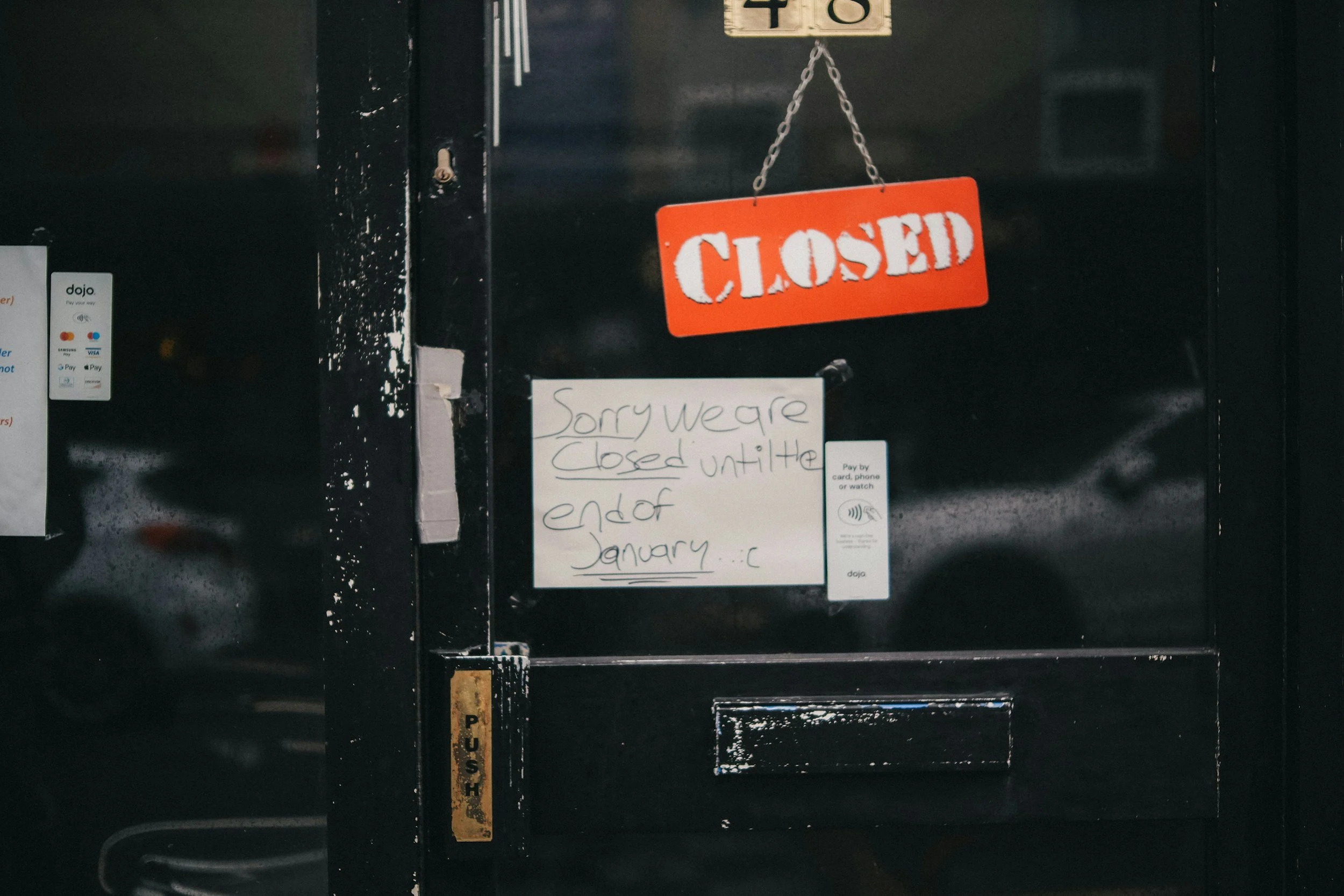
Orlando restaurant shuts down for 5th time this year, records show
Orlando restaurant shuts down for 5th time this year, records show
News 6, Orlando, July 27, 2026
Some folks think public records are not relevant to their everyday lives. It is stories like this that show that public records can provide very useful information that helps consumers make smart choices. In this case, it’s whether to frequent restaurants that have serious and repeated health code violations. If you want to know if a restaurant has had problems with roaches, rodent droppings, poor food handling techniques, and poor food storage practices, the public records will help you know before you go. Moreover, private businesses can get access to this information and make it available on apps that help you pick healthy and safe places to dine out.
“Last week, nearly a dozen Central Florida eateries were forced to shut down temporarily after a visit from a health inspectors, according to state records.
But out of all these businesses, one has now closed down five times this year thus far.”
To see the kind of data that the inspectors report on each restaurant they cite, follow the link below.

Sunshine Week: People are requesting more government records. Why are they getting less?
Sunshine Week: People are requesting more government records. Why are they getting less?
By ANNA MASSOGLIA, March 15, 2026
More Americans are filing Freedom of Information Act requests than ever, topping 1.5 million in 2024 and on track for another record in 2025. This will mark the third consecutive year that FOIA requests have reached seven figures.
But more requests do not necessarily equal more access to public government information.
As the volume of records requests has swelled, so has the portion of those requests that are rejected or otherwise incomplete.
The likelihood of a requester receiving everything they asked for is lower than ever.
Governments can only be held accountable when we know what’s happening inside of them.
That’s what freedom of information laws were built to prevent and right now, they’re losing ground.
Together, we can hold power to account and shine a light on government transparency.

The Foilies 2026: Recognizing the Worst in Government Transparency
The Foilies 2026: Recognizing the Worst in Government Transparency
Written by Kelly Kauffman, Anna Massoglia, Dillon Bergin, Aaron Mackey, Dave Maass and Beryl Lipton
Established in 2015, The Foilies are an annual project by the Electronic Frontier Foundation and MuckRock to recognize the agencies, officials and contractors that thwart the public’s right to know. We give out these tongue-in-cheek “awards” during Sunshine Week (March 15-21), a collective effort by media and advocacy organizations to highlight the importance of open government.
This year, we’ve got a few “winners” whose behavior defies belief.

Free website helps you find public records by state and county
The website called the Public Records Hub provides links to public record portals of 3,095 counties in the United States (out of 3,143), for 13 types of records, such as property records, court records, and property tax records. Browse official county and state sites (and clearly labeled vendor portals) with simple navigation and search.

Illinois FOIA Gras author launches records ‘Inspector General’
Illinois FOIA Gras author launches records ‘Inspector General’
Citizen journalist Tom Hayden of Evanston, Illinois, ended his Substack newsletter FOIA Gras last year after burnout and issues with the platform. But he’s back, requesting records to illuminate issues in his community, with the help of artificial intelligence. His new Inspector General tool allows people to find records with the help of AI.
Ask questions about government meetings, budgets, contracts, and documents. Inspector General searches through public records and cites its sources so you can verify the facts.

90.6% of Americans Support Freedom of Information
90.6% of Americans Support Freedom of Information
By Joseph L. Brechner Freedom of Information Project and Center for Public Interest Communications of the University of Florida College of Journalism and Communications
Strong support, limited engagement. 90.6% of respondents said they support access to public information. At the same time, 91.9% have never filed an FOI request, and four out of five have never visited a website related to freedom of information. Only 5.9% said they know a lot about FOI or consider themselves experts.
Shared values across political lines. When participants rated a list of descriptors on how well each described the function of freedom of information, “right to know” scored highest across liberal, moderate, and conservative respondents alike.
Political ideology shaped emphasis, not core support.

More evidence that Mass. must cure its anemic Public Records Law
More evidence that Mass. must cure its anemic Public Records Law
By: The Republican Editorials, Mar. 20, 2026
As we’ve already noted this week, the state’s Public Records Law is hobbled by the lack of consequences for agencies that withhold information. The poster child for abuse of the law’s provisions is the Massachusetts State Police. We documented that agency’s woeful secrecy in coverage last Sunday.
Today, we point to another instance in which the public struggled to realize the promise of open government. It concerns four years in which Northwestern District Attorney David Sullivan appears to have stubbornly held back public information.

Fighting for public records is more common in Pennsylvania, sometimes aided by AI
Fighting for public records is more common in Pennsylvania, sometimes aided by AI
Jaxon White/WITF, March 19, 2026
“More people than ever are fighting denials for public records from their counties, school boards and other public agencies in Pennsylvania.
Many appellants are turning to artificial intelligence to help in their efforts.
Liz Wagenseller is the executive director of Pennsylvania’s Office of Open Records, which decides whether to reverse a public records request denied by a government agency. Her agency has seen a “real explosion” of appeals in recent months, Wagenseller said, thanks in part to the spread of AI.
“Around September, we started to see evidence of AI being used in appeals,” Wagenseller said. “If you compare the recent six months to six months a year ago at that same time, there’s been a 64% increase in appeals — an enormous increase.”

It’s Sunshine Week, our annual reminder that freedom of information is essential to a free country
It’s Sunshine Week, our annual reminder that freedom of information is essential to a free country
By: Niki Turner , March 18, 2026
Laws governing public meetings, public records and open government emerged in the 1970s after the exposure of vast amounts of concealed government information and corruption — think Watergate and the Pentagon Papers. The idea was simple: government works better when the public can see how decisions are made.
You would think it strange to hand your hard-earned money over to an investment firm only to have them refuse to tell you how it was invested, what the profit margin was, or what caused any losses. Yet something similar often happens with our tax dollars, from the local level all the way up to the federal government.

Keeping an eye on government: Track taxpayer money, expose wrongdoing
Keeping an eye on government: Track taxpayer money, expose wrongdoing
By Kelly Shannon FOI Foundation of Texas, 03/18/2026
As we watch over our government, it’s often about the money.
Are taxpayer dollars being spent wisely on social programs, road projects and employee pay? Can we view government contracts with outside organizations? What are the details of bond proposals on the election ballot?
Long-established state open government laws – the Texas Public Information Act and the Texas Open Meetings Act – help us answer these questions and root out malfeasance.

Just $25 to File, No Lawyer Required: Assessing an Alternative Public Record Complaint Procedure
Just $25 to File, No Lawyer Required: Assessing an Alternative Public Record Complaint Procedure
By Mitch McKenney, November, 2025
This article examines an Ohio law aimed at resolving public-record access disputes quickly and at low cost. The 2016 statute allows those denied a record to pay $25 and file a one-page form to start an expedited case in the state’s Court of Claims, saving time and attorney fees. While other states offer attorney general or ombuds help in records disputes, none has a process that initiates a court action this way. Using data from the nearly 900 cases, a survey, and interviews with stakeholders, the article assesses how well the process works and if other states should emulate it. Comparisons, as well, are made with systems in Connecticut and Pennsylvania.
Comparison: Good. Fast. Cheap. Pick two. Independent enforcement mechanisms in Connecticut, Pennsylvania, and Ohio have their pros and cons, when compared (see Table 1, below). Pennsylvania’s system processes more appeals and at a much faster rate than the other two states, but costs the most for taxpayers, and rulings appear to favor government. Connecticut’s commission has the authority to address vexatious requests, fine agencies, and seems moderately priced, but takes the longest for resolution. Ohio’s system is the most affordable for taxpayers, appears to favor requesters the most, but handles far fewer appeals and charges appellants

This Sunshine Week, Florida reflects an alarming national trend of blocking the public’s access to information
This Sunshine Week, Florida reflects an alarming national trend of blocking the public’s access to information
By David Cuillier, Director of the Brechner Freedom of Information Project, College of Journalism and Communications, March 10, 2026
Once viewed as a leader in transparency, the Sunshine State now charges exorbitant copy fees that discourage average people from requesting public records.
According to the nonprofit MuckRock, 24% of public records requests in Florida come with a copy fee, averaging US$1,623. Only Oregon charges fees more often, at 28% of the time. Fees are intended to help agencies cover the cost of large requests, but they tend to be arbitrary and are often used as a way to get pesky people to go away.
And that’s assuming you even get the information you want. One of my own studies from 2019 indicated that, on average, if you requested a public record in Florida, you would receive it about 39% of the time, placing the state 31st in the nation.
In 2025, MuckRock put the percentage dipping lower, at 35%. In March 2026, it was at 34%.
State and local governments appear to be taking their cues from the federal government.
Typically, the Department of Justice releases annual statistics on FOIA requests every March. When I examined initial reports posted in January, when just 11 agencies had provided their reports, backlogs – that is, requests that remain unresolved after a year – had increased 67% from the previous fiscal year. The time to process simple requests nearly doubled.

Commentary: Public Records Requests Aren’t the Problem, They’re the Symptom
Commentary: Public Records Requests Aren’t the Problem, They’re the Symptom
March 10, 2026
Public records laws exist because government does not always volunteer information, even when decisions involve millions of public dollars; statutory planning requirements; procurement rules; or policies affecting housing, infrastructure, and vulnerable populations. When normal transparency mechanisms fail, citizens are left with one tool: formal requests for records.
In other words, public records requests are not the disease. They are the thermometer.
If key planning, contract procurement, or infrastructure decisions are clear, well-documented, and proactively shared, citizens won’t need to spend months digging through records. Transparency reduces requests. Opaqueness increases them.
It is also worth noting what the article itself acknowledges: public records access is central to journalism and government accountability. Limiting access because requests are inconvenient would punish the public, not solve governance problems.
If the goal is to reduce the burden on the staff, the solution is not to weaken transparency laws. The solution is better governance, clearer processes, proactive disclosure, and decisions made openly so residents do not need to reverse-engineer what happened after the fact.

Judges Outline Accelerated Modernization of Case Management System
Judges Outline Accelerated Modernization of Case Management System
March 10, 2026
The new system will replace the Case Management/Electronic Case Files system (CM/ECF) that the courts have relied on for nearly three decades to manage heavy caseloads and carry out court operations. It is used by litigants to file cases and related documents, and it provides the public with access to over 1 billion court records.
It is anticipated that the district courts will be the first to start implementing aspects of the new case management system within the next year, followed by appellate and bankruptcy courts. The timeline for completion is two to three years sooner than originally expected.
In response to growing cybersecurity threats, the new system will incorporate state-of-the-art security features across all courts, with a focus on keeping records safe while improving functionality and reducing costs and risks associated with localized software applications.
Currently, six courts have been identified for testing the initial functional software components. The experience of these pathfinder court users will guide ongoing development and help to shape the Judiciary-wide rollout of these new tools. Improving the search functionality of the Public Access to Court Electronic Records (PACER) system is a key component of the modernization project.

St. Petersburg looks to improve its public records procedures
St. Petersburg looks to improve its public records procedures
By: Mark Parker, St. Pete Catalyst | Published Jan. 25
Hanewicz stressed the importance of government transparency and said she couldn’t recall a previous public discussion on the record request policies established in 2012. “I also have the belief that if you do come across something that can be improved, then you improve it. And that’s my goal here,” she said. “I don’t want things to fall through the cracks,” Hanewicz added. “If there are things we can make better, let’s have an open mind so we can do that.”
City Administrator Rob Gerdes pledged to explore implementing a new document management system that provides a centralized location for records, as departments often use varying platforms. Hanewicz also advocated for an employee service level tracking mechanism and credited the administration for conducting a related survey to discern “what they may need.”
Srinivasa noted that St. Petersburg began using the internal GovQA platform to help process requests in 2014. He and Assistant City Attorney Jeannine Williams, who monitors compliance, subsequently drafted the city’s first guidebook to ensure uniformity.
“Since then, multiple jurisdictions, as well as municipalities throughout Pinellas County, throughout the state of Florida, have adopted our guidebook as their own,” Srinivasa said. “Prime example: The city of Tampa, most recently, adopted it as well.”

“Tracking transparency: Lawmakers consider making changes to GRAMA, Utah's public records law”
“Tracking transparency: Lawmakers consider making changes to GRAMA, Utah's public records law”
BY DANIELLA RIVERA, KSL TV
SALT LAKE CITY — Utah lawmakers are weighing proposals that could change how the public accesses government records under the Government Records Access and Management Act, known as GRAMA.
HB 64 would make several changes including:
· Ensuring all public employees are given a summary of GRAMA requirements
· Making it a crime to delete records to avoid disclosure
· Extending some deadlines for responses to requests
First Amendment attorney Jeff Hunt, who helped write GRAMA, said the bill includes positive elements but also raises concerns. He pointed to language involving education records which exempts some records from GRAMA, instead deferring to a federal records law.
Lawmakers also home to reverse a last‑minute change to GRAMA done last year that makes it nearly impossible for citizens to recover attorney fees even when a court rules that a government agency wrongly withheld public records — a shift adopted without any opportunity for public input.

“Florida lawmaker takes on DeSantis over public's right-to-know”
“Florida lawmaker takes on DeSantis over public's right-to-know”
Tallahassee Democrat | Jan. 22, 2026
In response to the Gov. Ron DeSantis administration's slow-walking public records requests, a Florida lawmaker who's been publicly at odds with the governor is pushing against the sluggish turnarounds.
Rep. Alex Andrade, R-Pensacola, filed legislation (HB 437) this session giving state agencies and similar record-keepers three business days to either pony up public records or give an alternate "good faith estimate" of how long they need.”
Key points:
A new bill would require Florida state agencies to move faster when responding to public records requests.
The proposed legislation comes amid criticism of the DeSantis administration for slow responses to such requests.
First Amendment advocates support the bill, stating it could help repair the state's "Sunshine Laws."

“Environmental watchdog sues Lincoln County over public records dispute”
“Environmental watchdog sues Lincoln County over public records dispute”
The Montana Environmental Information Center says that Lincoln County has failed to provide documents requested under the state’s right-to-know laws related to the county’s push to change pollution standards in Lake Koocanusa.
MEIC said they filed the lawsuit to ensure the state constitution is being followed.
“We’re in the business of holding our elected officials and corporations accountable,” Derf Johnson, deputy director of MEIC, said in a press release. “When our public resources are offered up as sacrifice to a foreign, for-profit corporation with a history of polluting and leaving a mess, we definitely want to know what happened behind the scenes.”